
A violin curriculum, from open strings to third position
Violin teaching is sequenced whether you write it down or not. The Suzuki books, the grades and the positions all come in an order. ClefRoom puts that order somewhere a student, a parent and a substitute can see it.
Free up to 100 students. No credit card to start.
What violin teachers run into
Suzuki and the grades pull in two directions
The books sequence repertoire; the exam boards sequence scales, sight-reading and technique. Most studios teach both and hold the mapping in their heads.
Shifting and vibrato need a plan, not a reminder
Positions, vibrato and bow distribution each take a term of deliberate work. Without goals per level they get taught in the gaps.
Group class at three levels
Saturday group class has a Book 1 student next to a Book 4 student. Teaching to the middle serves neither.
Levels violin teachers already use
Suzuki Books 1–10 sequence repertoire; RCM, ABRSM and Trinity grade scales, studies, sight-reading and pieces. Adopt one frame or map them onto each other: a level can carry a Suzuki piece, an exam study and a scale requirement side by side.
Book 2, one term
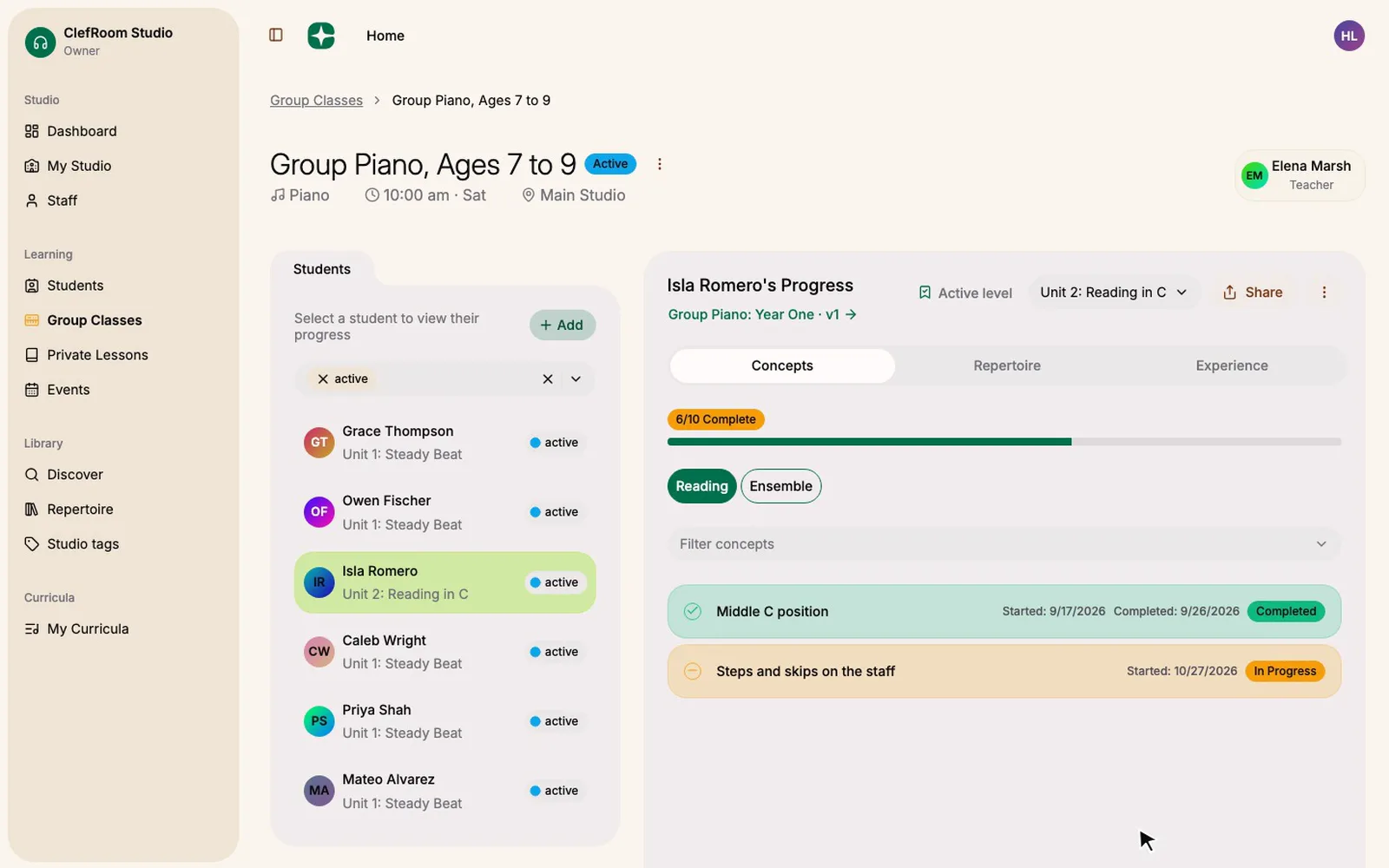
A violin level that maps the book onto the grade, so both get taught.
Next student: same slots, different titles.
How ClefRoom fits violin teaching
Positions and bowings as goals
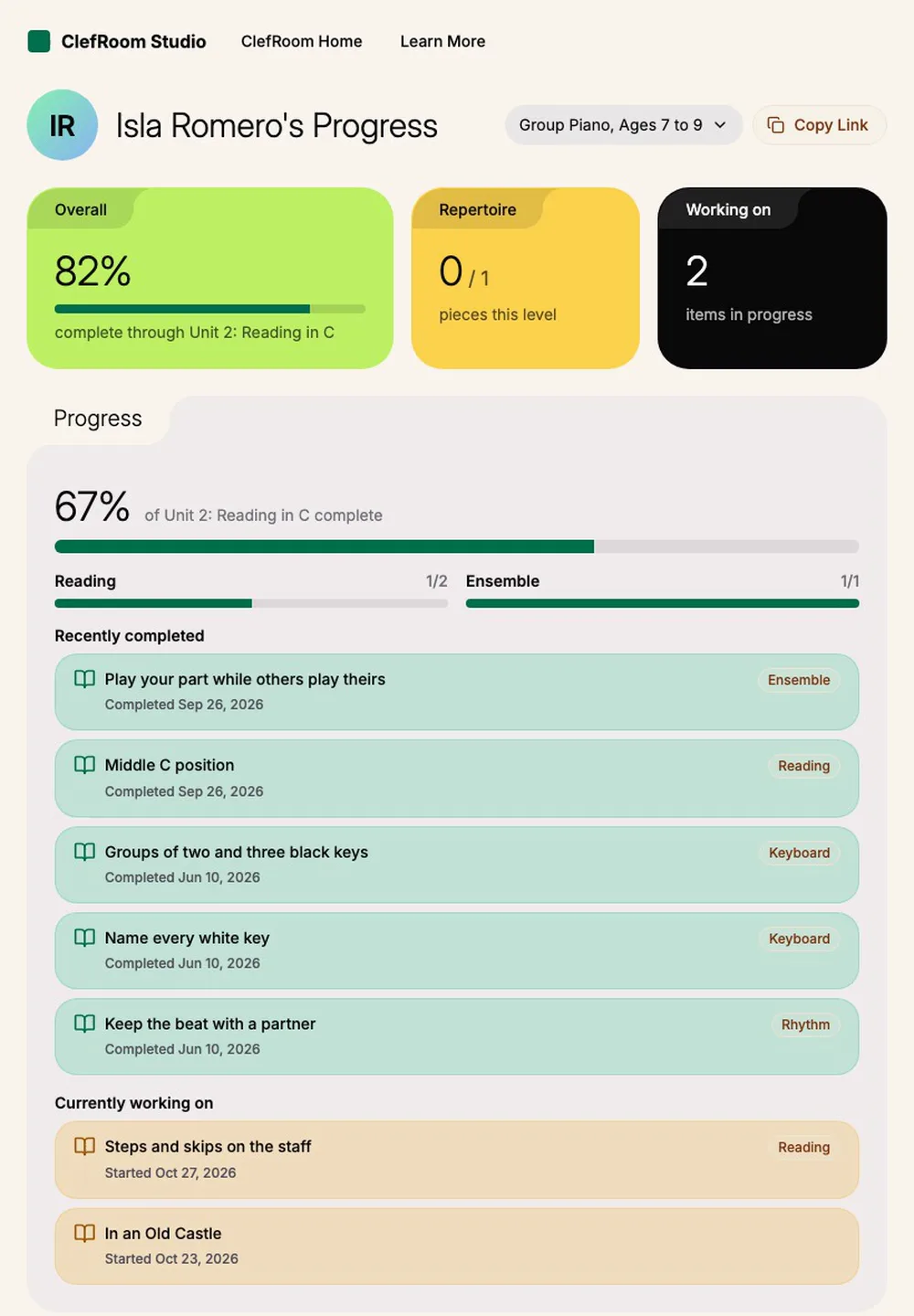
Shifting to third position is a goal with a status, not a hope. It sits in the level and shows up on the record when it is done.
Play-along and reference recordings on the piece
Attach the recording, the piano accompaniment and your bowing notes to the piece once, for every student who reaches it.
Group class, individual plans
Each student in the Saturday class keeps their own level and their own progress. The class is the room, not the curriculum.