
A piano curriculum that holds its shape student to student
Method books end around Level 2. After that every piece is a decision, and every student's plan lives in your head. ClefRoom holds the graded frame so you only choose the titles.
Free up to 100 students. No credit card to start.
What piano teachers run into
The method book ran out
Faber, Alfred and Piano Adventures decide everything for two years. Then the last book ends, and twenty-five students each need a year built by hand.
Scales and sight-reading fall off the plan
Repertoire gets the lesson time because it is on the recital. Technique and reading only get taught when there is a plan that puts them there every week.
Transfer students arrive with no record
A new student brings a folder of pieces and no idea what level they are. You spend the first month finding out.
Levels piano teachers already use
RCM, ABRSM and Trinity grade piano from preparatory to diploma, with technical requirements, sight-reading and repertoire lists at each grade. Adopt the one your studio prepares for, or write your own levels in the same shape: technique, reading, theory and repertoire per level.
Level 4, one term
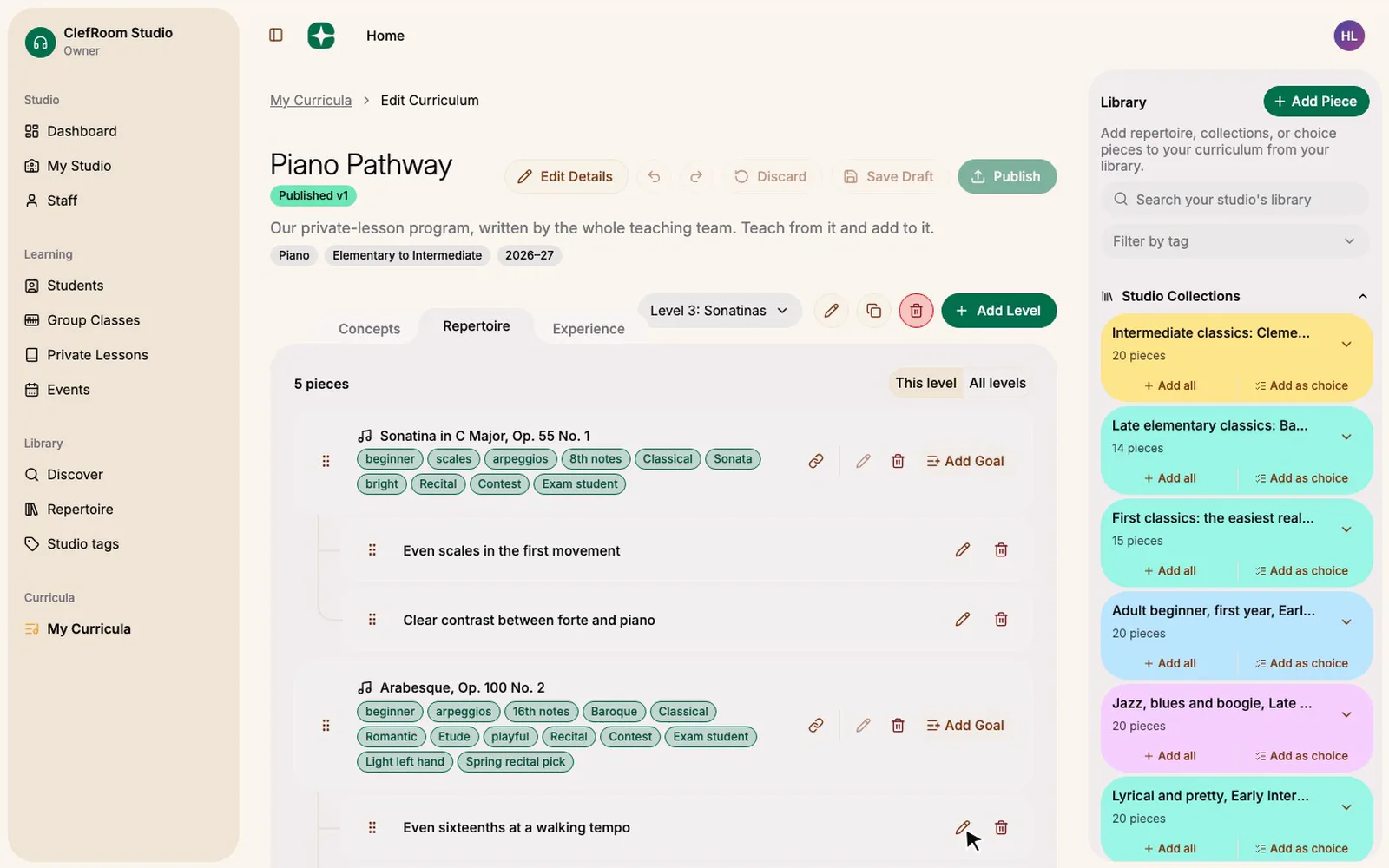
The shape of a piano level. Write it once; the titles change per student.
Next student: same slots, different titles.
How ClefRoom fits piano teaching
Technique lives on the plan
Scales, arpeggios and chords are goals inside every level, tracked like pieces, so they get lesson time without you having to remember to give it.
Repertoire with the recording attached
Attach the reference recording, the score link and your fingering notes to the piece once. Every student assigned it gets them.
Progress parents can measure
A shared link shows which level, which pieces, which goals, so "is my child progressing?" has a better answer than whether it sounds like a song yet.