
A guitar curriculum for students who came for songs
Most guitar students arrive wanting to play something they know, not to read notation. A curriculum can honor that and still teach them to read, count and play in time, if the plan holds both.
Free up to 100 students. No credit card to start.
What guitar teachers run into
Songs first, technique never
The student who only wants the riff learns the riff and nothing that would let them learn the next one. Chord changes, rhythm reading and right-hand technique need a place on the plan.
Three guitars, three syllabi
Classical, acoustic and electric students sit in the same studio with different books, different grades and no shared idea of what Level 3 means.
Progress is invisible to parents
A parent can hear a song. They cannot hear that a barre chord finally rang clean, or that the student read the piece instead of copying it from a video.
Levels that fit the guitar you teach
Classical guitar has RCM and ABRSM grades; acoustic and electric have Rockschool and Trinity Rock & Pop. Adopt the one you prepare students for, or write levels that mix them: a chord-and-song track beside a reading track, in the same level.
Level 2, one term
A guitar level that holds the song and the study that makes the song possible.
Next student: same slots, different titles.
How ClefRoom fits guitar teaching
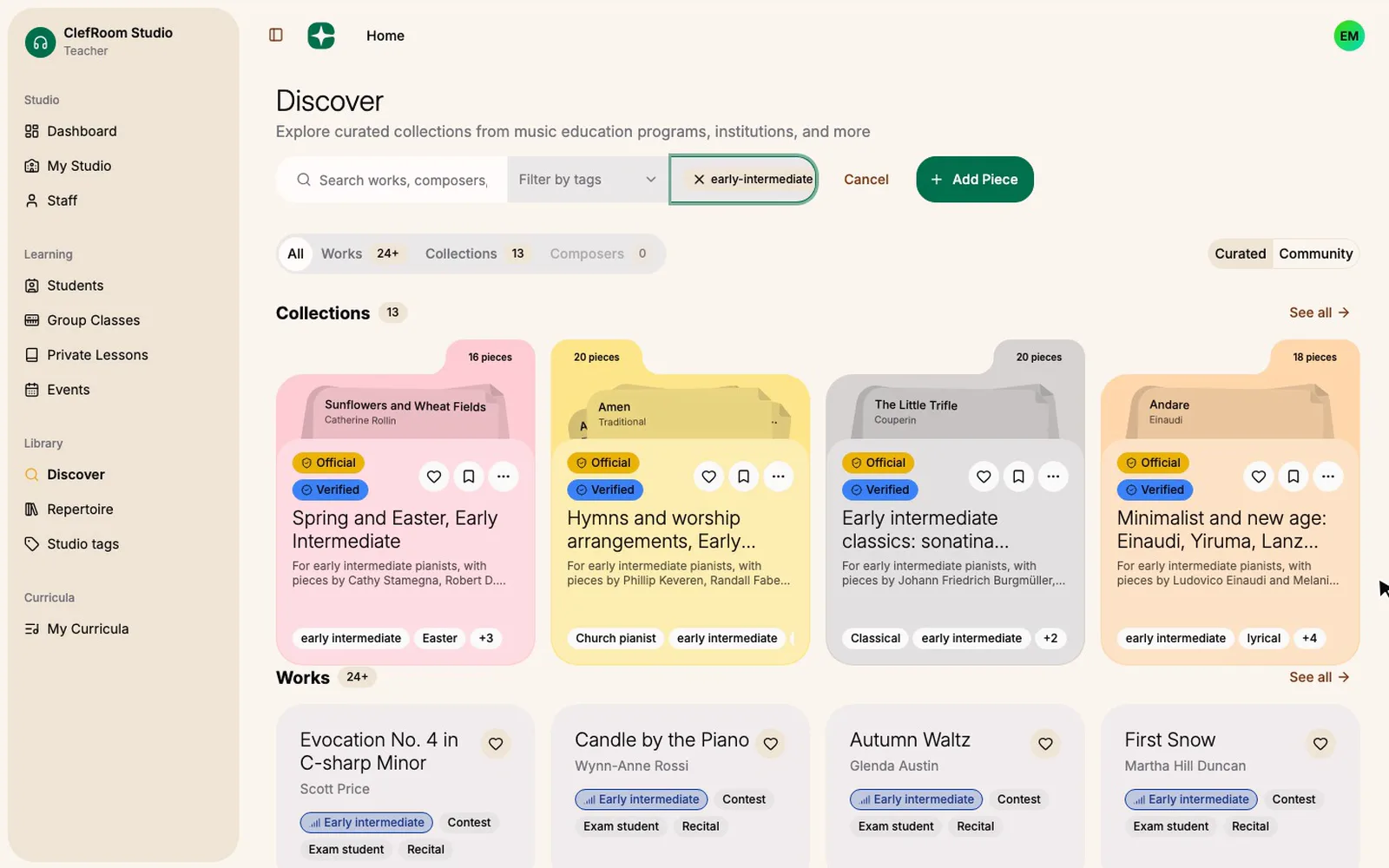
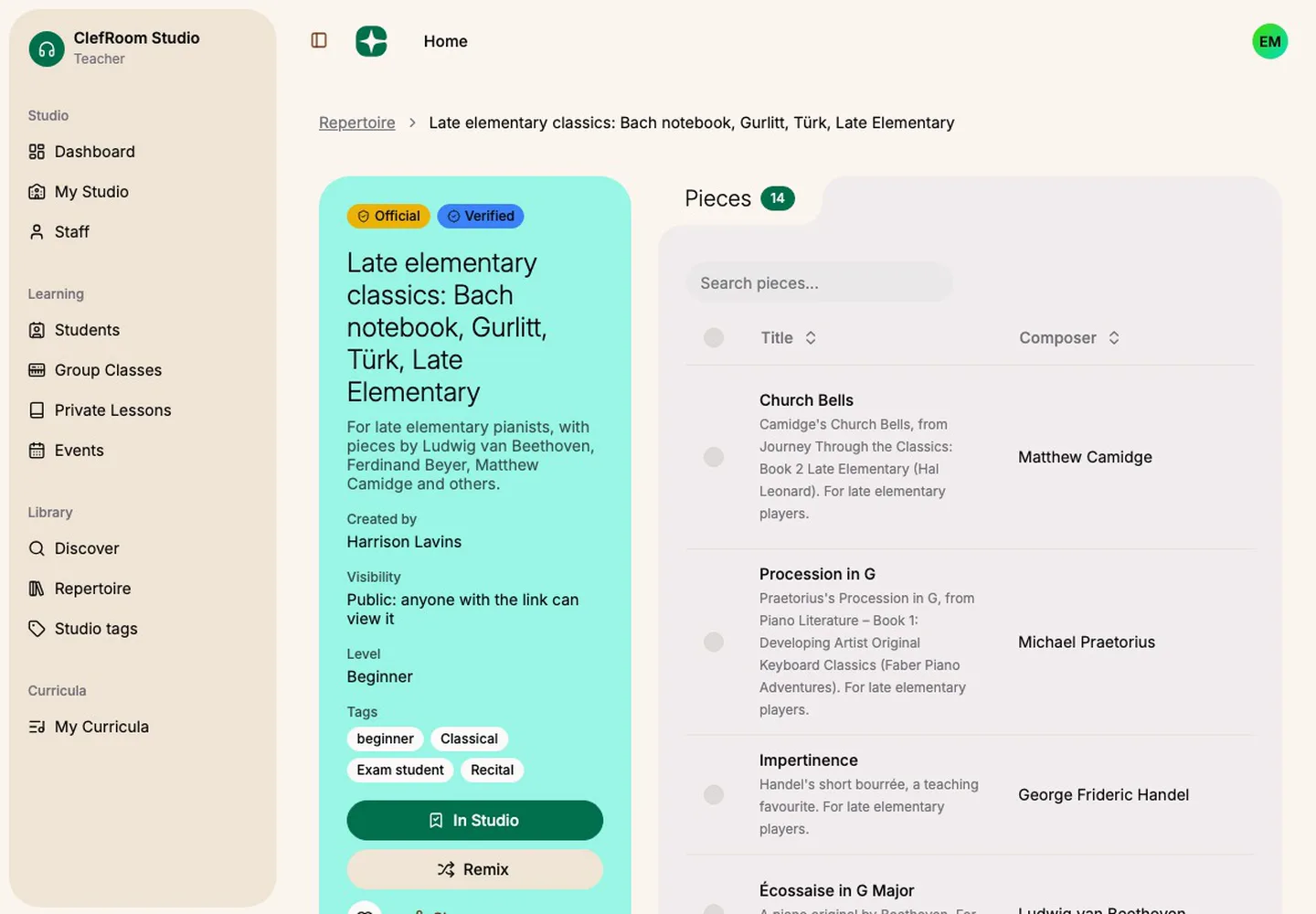
Songs and studies on one plan
A song the student chose sits in the same level as the study that teaches the technique it needs. Both get tracked; neither gets forgotten.
Tabs, charts and recordings on the piece
Attach the chord chart, the tab, the backing track and the recording to the piece itself, once, and every student assigned it has them.
One record across styles
A student who moves from acoustic to electric, or from songs to classical, keeps one continuous history rather than starting a new folder.